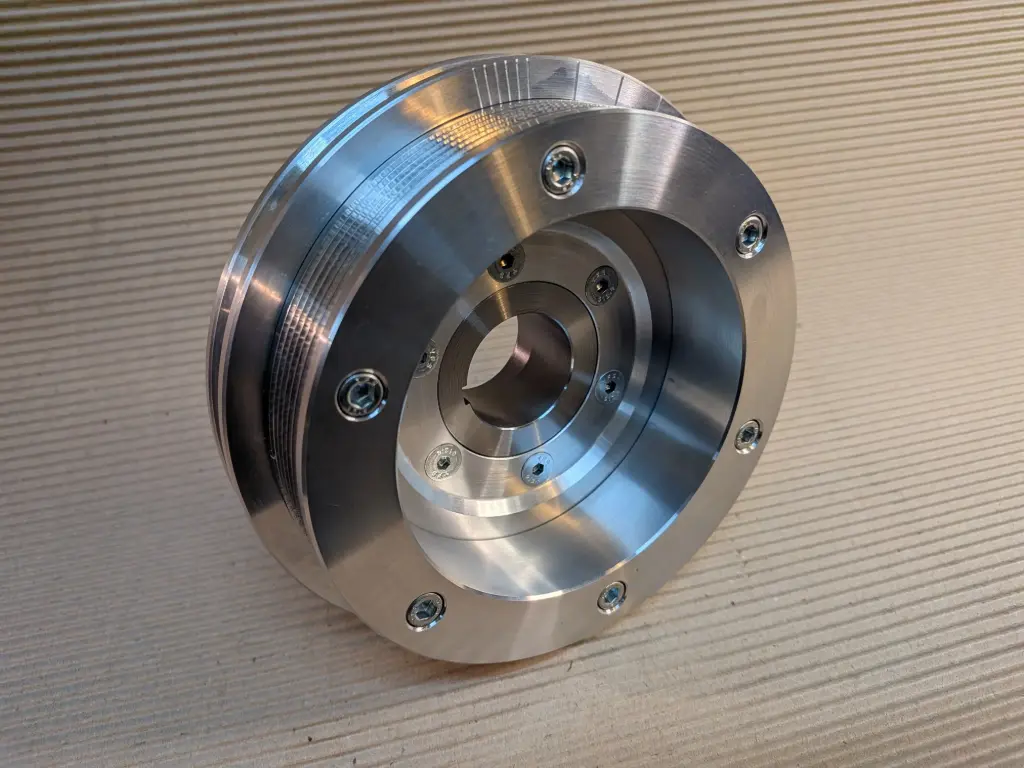
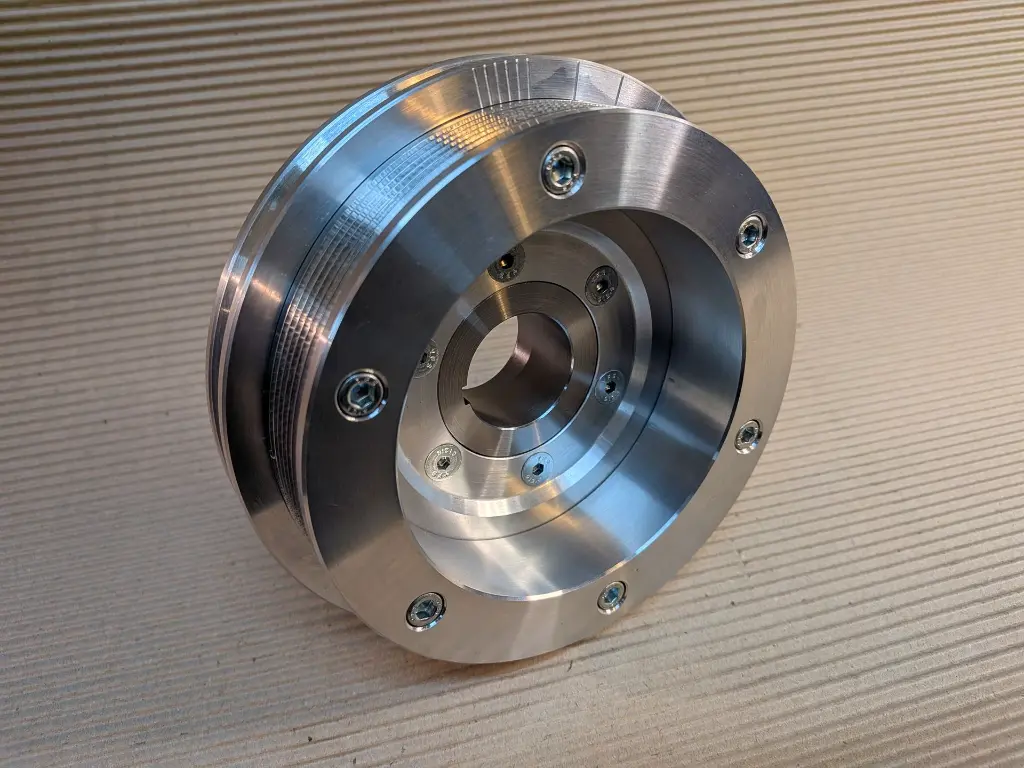
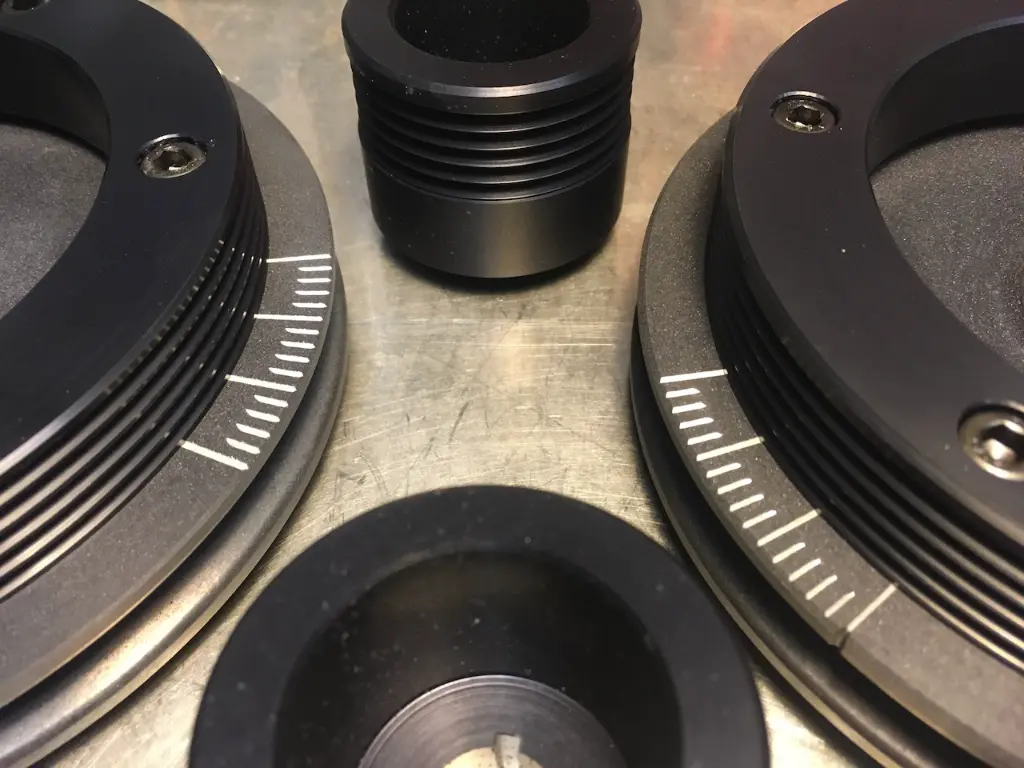
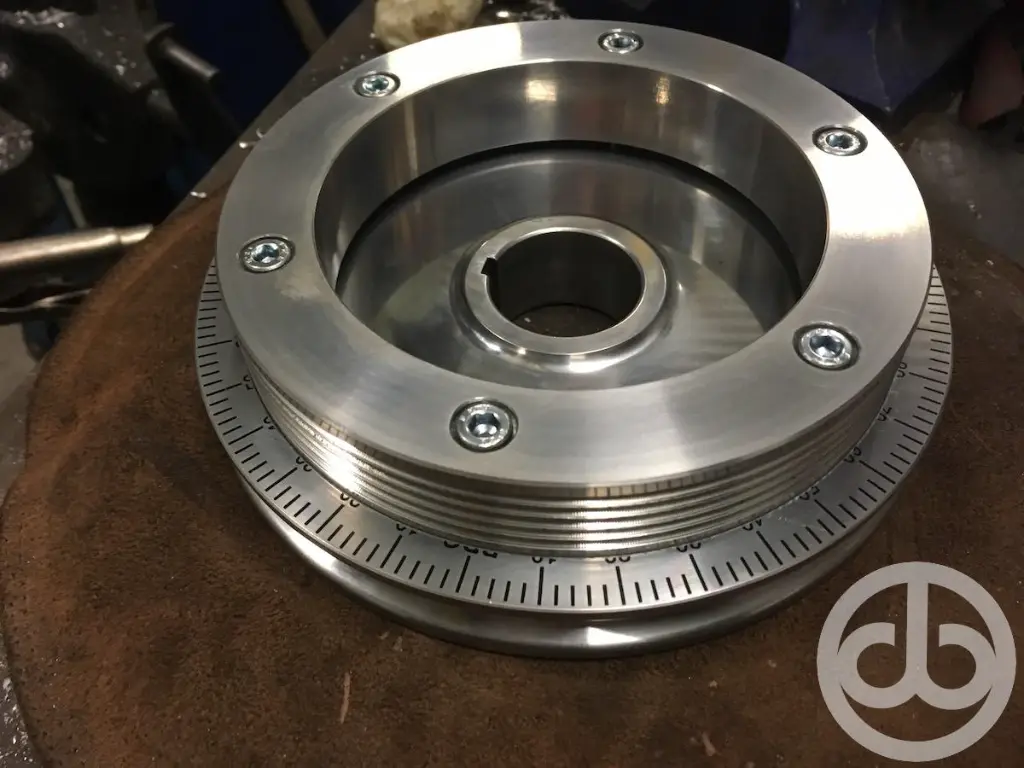
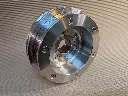
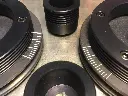
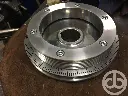
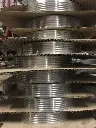
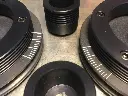
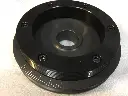
Pulley - Crank 3pc
If you are interested in a custom configuration, please feel free to contact us using the 'Contact Us' button at the top of the page.
Drive Pulley Tech
Common questions about pulleys and belts
Running a single (common) belt means that the loads generated by the supercharger are also put on the generator bearings.
The generator input bearing is only 35mm diameter by 11mm wide and is not designed to take the loads generated by a supercharger. By comparison the supercharger input bearing is 52mm diameter and 16mm wide.
When you consider that even aftermarket superchargers that use a smaller 6303 bearing (47x14mm) are prone to bearing failure, it is easy to see that the loads seen by the generator are not good for it and premature bearing failure is definitely on the cards
Running a dual drive belt set up gives you dedicated drive belts for both the supercharger and generator, which eliminates the blower load from the generator, and allows you to run proper tensions for both the blower and the generator belts.
Serpentine / common belt drive setups are fine for lower boost setups. If you're just targeting 5 or 6psi then a single belt serpentine setup will be okay. This does not over stress the generator bearings too much, especially if you are using a PK5 style belt where you can avoid over tensioning.
The big issue is using a PK4 belt and / or trying to target higher boost levels. The additional load from the increased pressure takes a lot of force to turn. The outcome is that your belt WILL slip and you'll know its slipping too. It's not a case of 'if' it slips, it really is a case of 'when'. New belts are great as they're nice and sticky, but as the belt ages, the pulleys get a polished surface, the belt tension drops, the belt dust increases and the grip starts to go, so the belt slips.
The natural reaction is to tighten the belt some more. This kinda fixes it a little for a while, but now you've just added a whole bunch of additional tension to the generator bearings, and that's on top of the extra load caused by the increased boost pressure. The outcome is that the belt wears faster and pretty soon you're back to a loose slipping belt again, that's if the generator bearings don't fail first.
It's a never ending battle, and one that can only be properly solved by more belt grip and less tension on the generator bearings. This is why we developed the dual drive setup with a dedicated blower drive.
Vee belts are fine provided that they are used within their designed capabilities. We offer a dual vee belt blower drive configuration that retains the stock generator drive belt and adds two additional vee belts to drive the blower. This is a popular configuration for those putting together 'vintage speed' style builds and are supplied as standard on our our vintage kits
Using a single vee belt in a common belt / serpentine configuration like some do is simply madness. Vee belts are not designed to bend in the opposite direction, so wrapping them around an idler pulley, blower and generator is just asking for trouble. Not only does the constant flexing cause the belt to fatigue and loose tension, it also creates a lot of belt dust causing your engine compartment to become a black dusty mess. So not only will the belt slip from lack of tension, but you'll also lose grip due to the black dust coating everything.
We tried this with out very first design iteration and soon found out that it wasn't the way to go. YES that old video of the bus on the Dyno is my bus. It always makes me laugh that those copy-cat manufacturers copied the worst version of our kit. The version with the serpentine Vee belt setup.
Having worked through all of those belt drive issues the dedicated drive belt was the outcome.