?unique=18bab3c)
?unique=18bab3c)
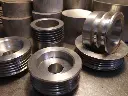
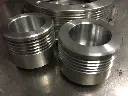
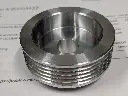
Pulley - AMR Blower
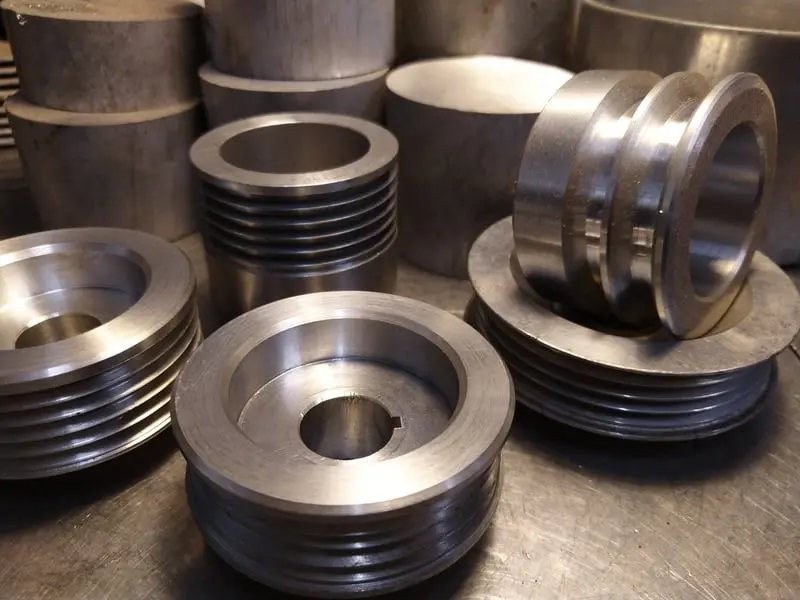
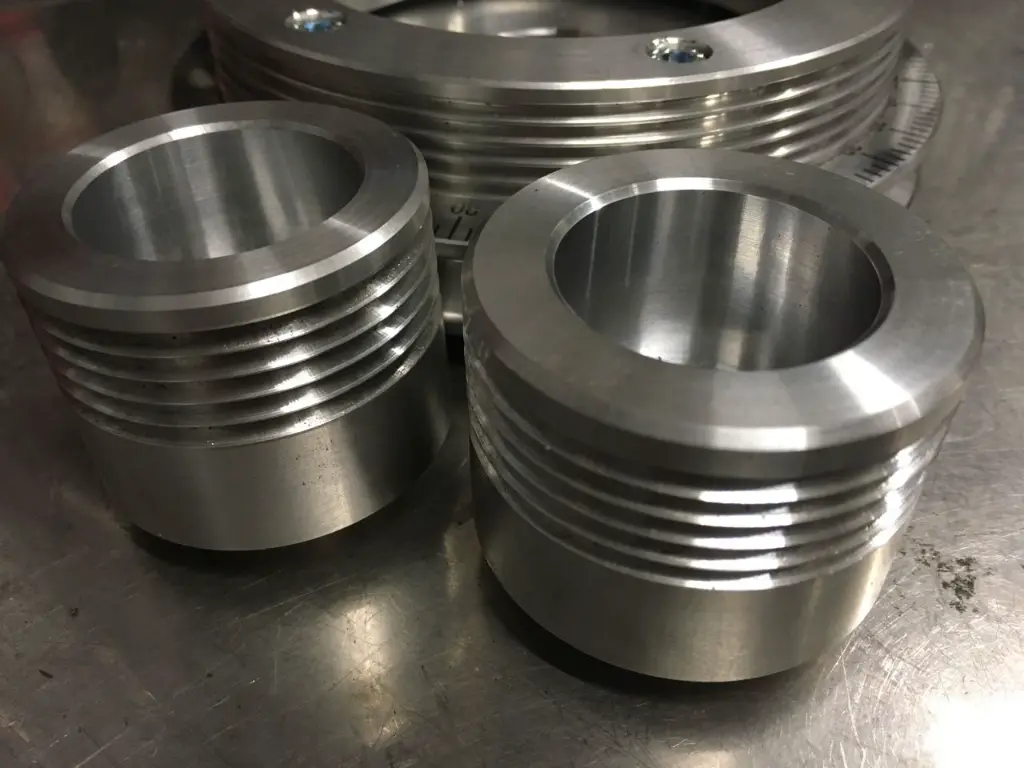
We manufacture all of our supercharger pulleys in-house.
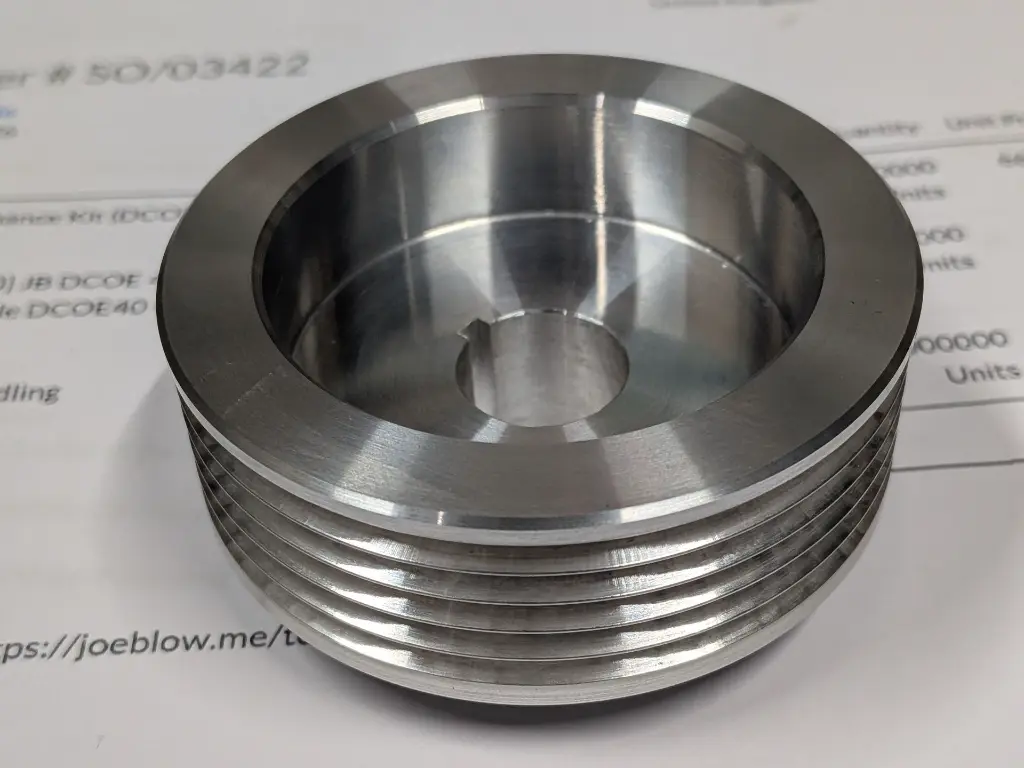
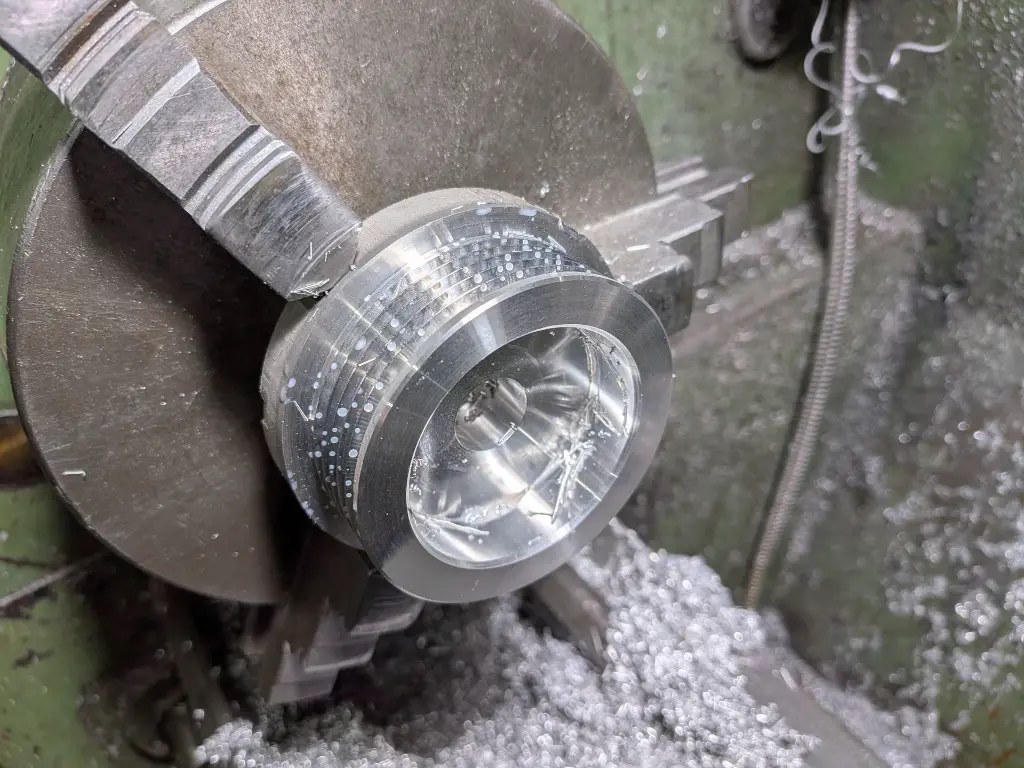
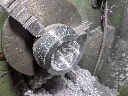
Each pulley is hand turned from Billet 6061-T6 aluminium in our extensive machine shop allowing us to provide custom pulleys in a range of dimensions to suit your project.
The pulleys listed here are for AMR300 and AMR500 superchargers and are provided with a standard offset which is the same as the stock AMR300/500 pulley and is a drop in replacement. We can also provide other custom offsets to suit our dual belt drive systems or your own custom application.
Pulleys are available in PK profiles in widths from PK4 to PK8. We also offer Vee profile, Dual Vee profile as well as Glimer pattern.
Select the pulley dimensions from the drop down menus. Pulleys are manufactured with a 17mm bore which is suitable for the AMR500 or a 15mm bore to suit the AMR300.
If you require a size / offset or combination that is not listed here, or you would like a custom finish, please get in contact with us as we can make pulleys to suit your own requirements.
Please note that as all pulleys are made to order, there will be a small delay after placing your order whilst your pulley is made. Generally this is no longer than a few days but may be longer depending on current workload
Boost Calculator
what size pulley do you need?
Pulleys, Blowers and boost...
Useful info to help you use this form
The form is based on traditional text-book formula and so to be useful needs to be fed with realistic and accurate data. Unfortunately the most important data (VE) is not easy to derive and it's different for each engine.
So, for this to be a useful tool we have included some suggestions for VE values that can be used as a starting point.
The form is pre-loaded with values suitable for a stock 1600cc engine.
If you have any feedback or want a specific blower or engine capacity added, just reach out to us via the contact form at the top of the page.
The AMR500 is a straight rotor rootes style blower which has a volumetric efficiency of about 70%. This is common for most rootes blowers.
By comparison most Eatons quote a volumetric efficiency of around 80% - but that is a four lobe high helix scroll rotor design.
The efficiency of a Rootes blower also drops off at higher pressures and higher temperatures. So the closer you are operating to the adiabatic limit of the blower, the more that the efficiency drops off. Generally this limit is approximately at a 2:1 pressure ratio or 1 bar (14.7psi).
So if you are planning to run at higher boost levels, reduce the efficiency accordingly.
Normally if you are moving towards this limit, you should really be considering a larger blower.
Aircooled engines are not exactly the most efficient. For a stock 1600cc engine you can expect somewhere around 70% volumetric efficiency. Older engines are less efficient due to smaller valves and ports. The VE guide values shown are typical list values for stock engines.
As you increase capacity, you also typically increase the VE as a result of other sympathetic modifications, for example valves, cam, compression ratio and exhaust improvements. These improvements generate a relative increase in volumetric efficiency. Typical figures for mild states of tune for increased capacities are noted in the drop down as a guide. They may be more or less than this for YOUR engine.
If you are trying to calculate pulley ratios and blower pulley dimensions, it is important that you keep an eye on the Max Blower Speed. For an AMR500 you do not want to exceed 16k rpms at max engine rpms.
You also need to consider that adding boost will also increase your maximum engine rpms. So for a stock 1600 engine with a redline of 4-4500rpm you will see an increase of between 500-1000rpm, taking your max rpms up to 5500. This means that you need to use this figure in your calculations.
So working backwards the largest drive ratio you can use in this case is 16000/5500 = 2.9
If you are using a performance camshaft, your max rpms may be even higher.
The calculator can estimate the power gain you will make based on the current power of your engine and the amount of boost you will make.
This is a basic calculation and is provided as a general guide
Engines are essentially air pumps. The engines efficiency is a measure of it's ability to move air. The higher the volumetric efficiency, the more air it can move / consume per engine revolution.
Boost pressure is created when the blower air flow exceeds the engines air consumption. The excess air creates pressure at the engine inlet (boost). The amount of boost is a relative to the ratio between the engines consumption and the blowers output.
So, if the engine efficiency increases, the engines air consumption increases, and if the blower is still moving the same amount of air, the net result will be that the boost level drops.
If you live in a region at high altitude or want to use this calculator for a specific event or elevation (maybe Bonneville which has an elevation of 1200metres and a typical barometric pressure of 12.5psi) you can set this value to your local Barometric pressure.
Typically at sea level the pressure is 14.7 psi - this is also the standard for 1 bar / 1 ATM
If you are unsure, then just leave it set to 14.7 as this is also considered standardised pressure (1 atm)